FILE SECURITY FOR MEDTECH & INDUSTRY

File security for MedTech and industry: inspect files before they reach critical systems.

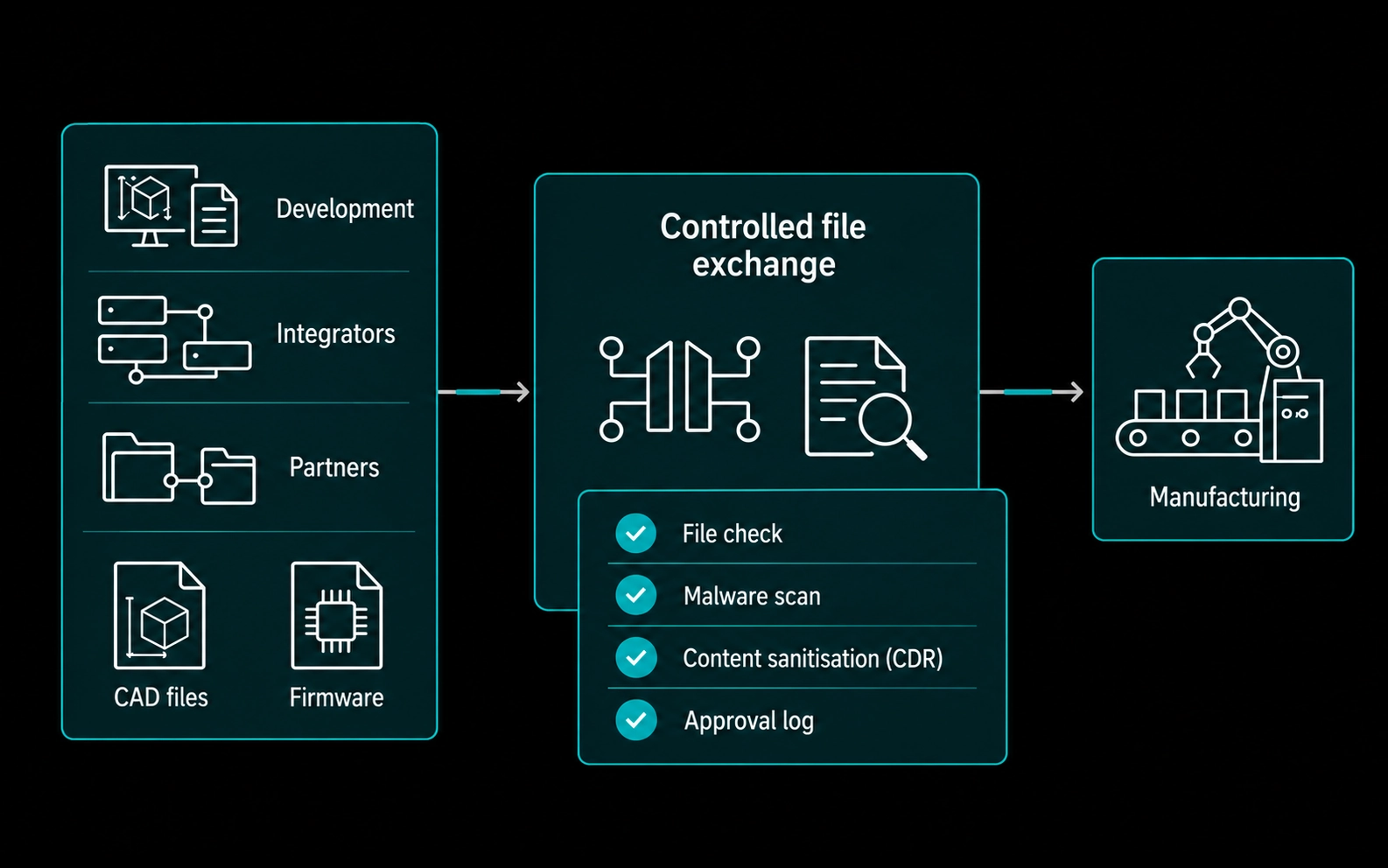
Supplier data, email and portal uploads, USB and service files, and content from storage systems enter development and production workflows every day. PEC Healthcare helps organisations identify critical file intake points and set up inspection and approval processes before files reach ERP, MES and engineering systems, using suitable file inspection technologies.

  • Assess external file intake
  • Define inspection and approval routes
  • Integrate with existing workflows
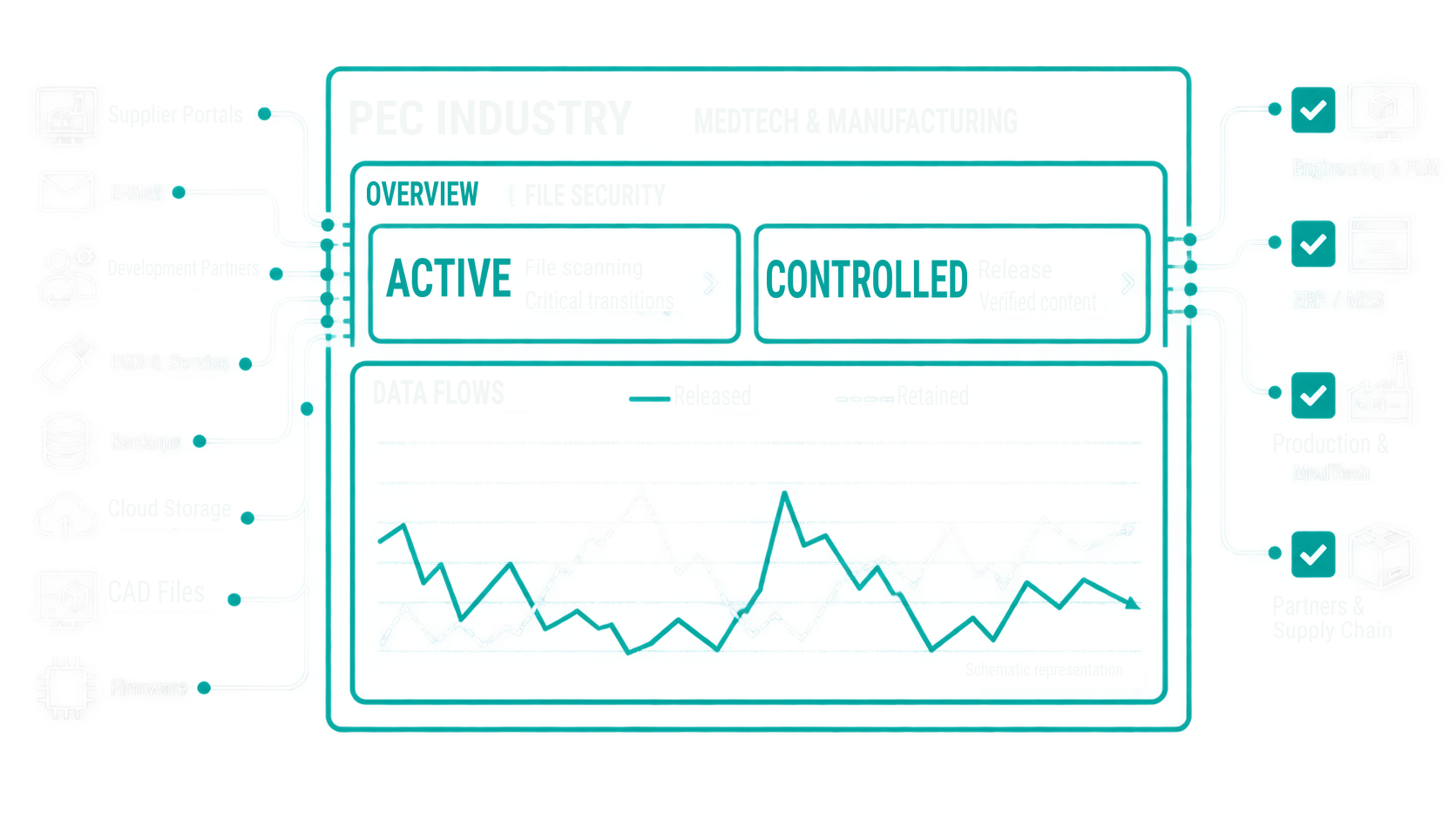
Schematic illustration of file routes, a control point and destination systems

01 · FILE INTAKE IN DAY-TO-DAY PRODUCTION

File security must fit day-to-day production and development.

Inspection and approval processes should fit maintenance windows, system dependencies and responsibilities — without unnecessarily blocking operational approvals.

Protect industrial data flows before untrusted files reach critical systems.

Explore more contexts horizontally

02 · CRITICAL FILE TRANSFER POINTS

Where untrusted files enter industrial processes.

New files reach organisations through more than email. They arrive via supplier portals, maintenance partners, removable media, engineering projects and shared storage. The key is to identify where inspection is feasible and useful — before content reaches production-adjacent or business-critical systems.

Explore more scenarios horizontally

SUPPLIER UPLOADS

Inspect supplier files before they reach engineering or production systems.

Suppliers transfer specifications, CAD files, documentation or software packages. An upstream inspection point can connect file types, origin information, malware indicators and approval rules to the defined destination system.

Workflow
Portals, uploads, specifications and software packages
Decision points
File types, origin, destination systems, exceptions and approvals
Risk
Files may remain unchecked before they are handed over to technical destination systems.
Potential benefit
A defined inspection point can make file origin, type and approval route visible before handover.
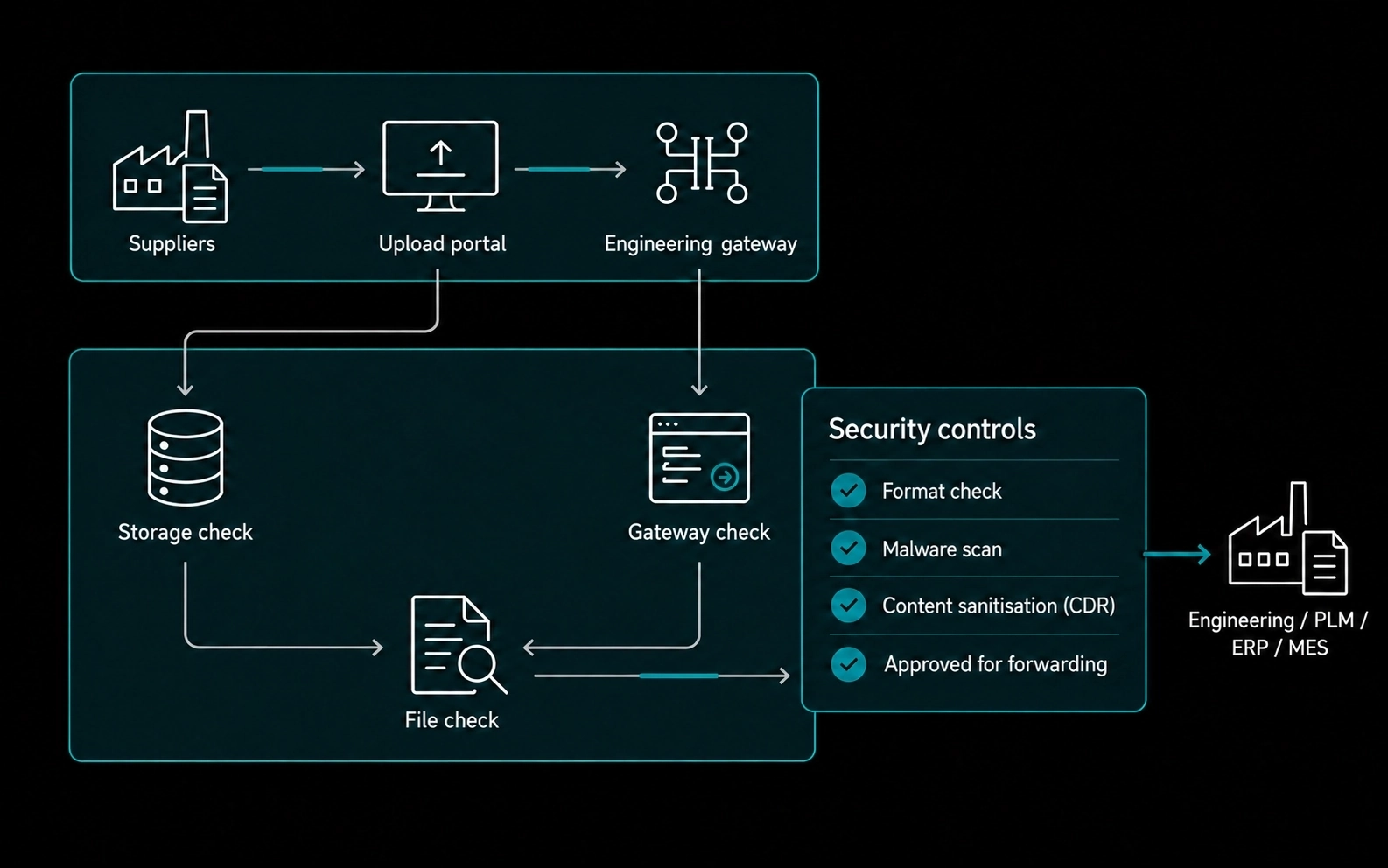
Schematic inspection route for supplier files before engineering and production systems

03 · PROTECTION ARCHITECTURE

Integrate file inspection where external content meets critical systems.

Not every file intake can be secured in the same way. We consider data sources, supported file formats, interfaces and existing approval processes. From these, we identify appropriate control points — for example, before supplier documents are handed over to ERP, MES or engineering systems.

01 · FILE ROUTES

What enters the organisation?

  • Suppliers & uploads
  • Development & partners
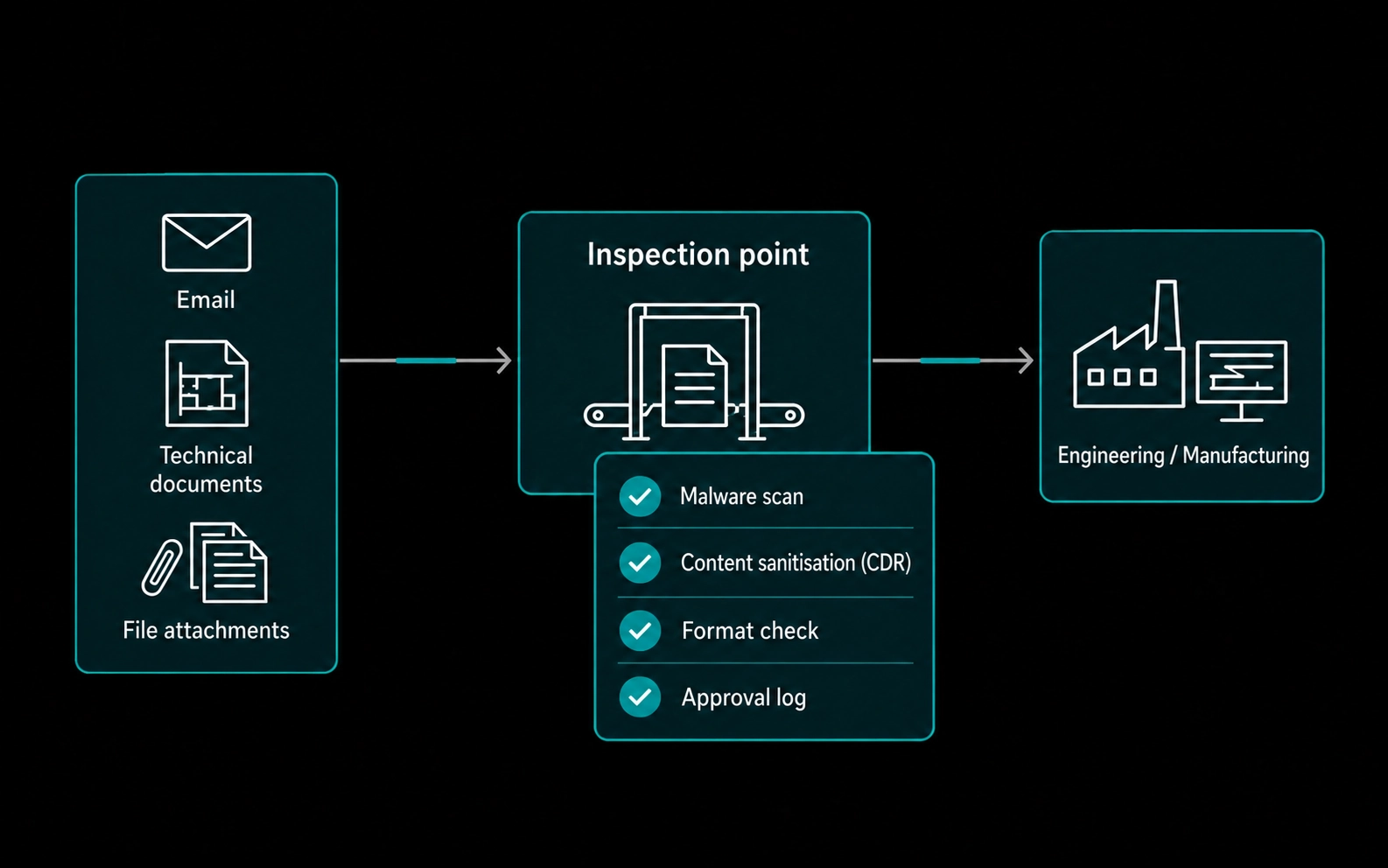
  • Email & documents
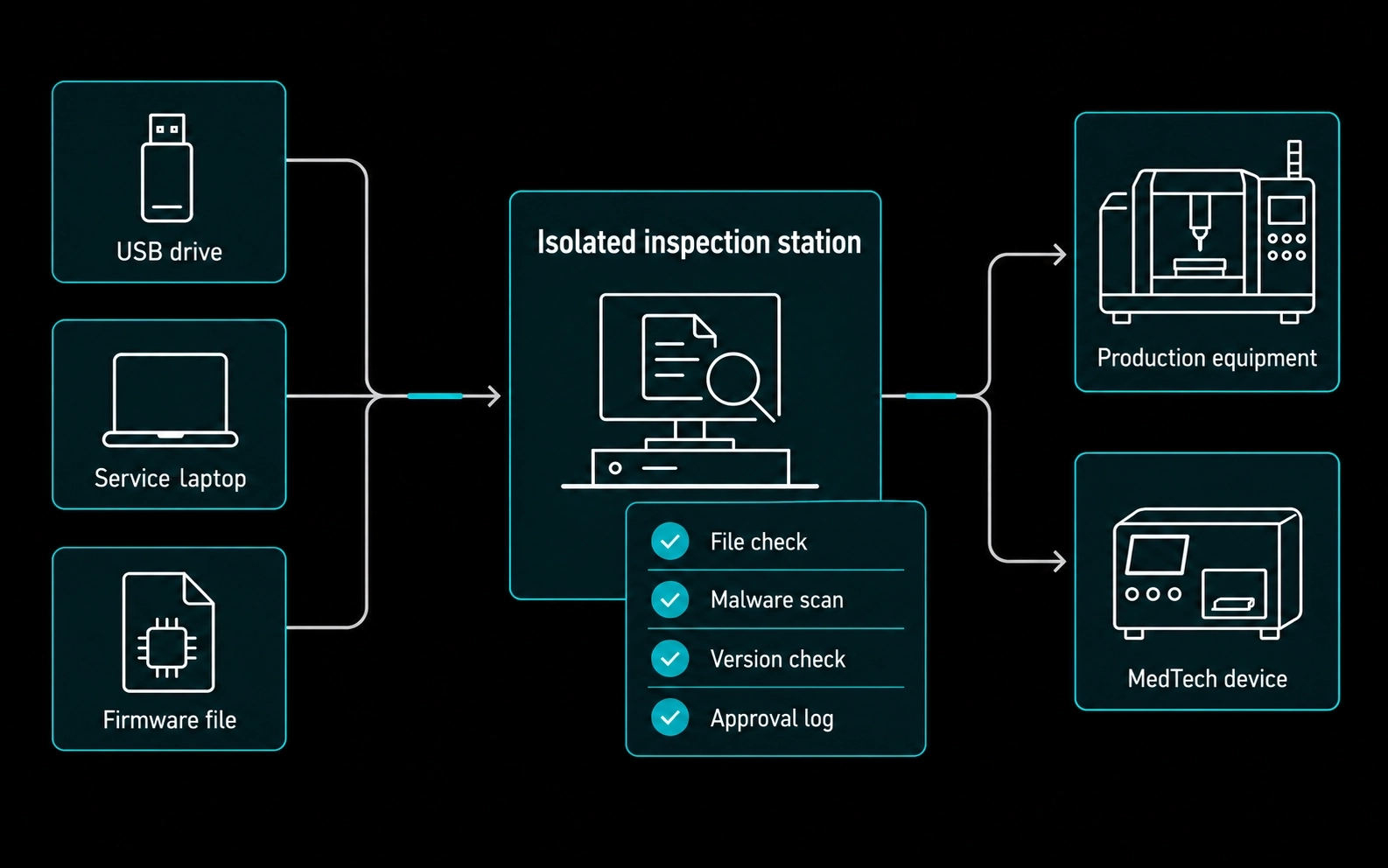
  • USB, service & firmware
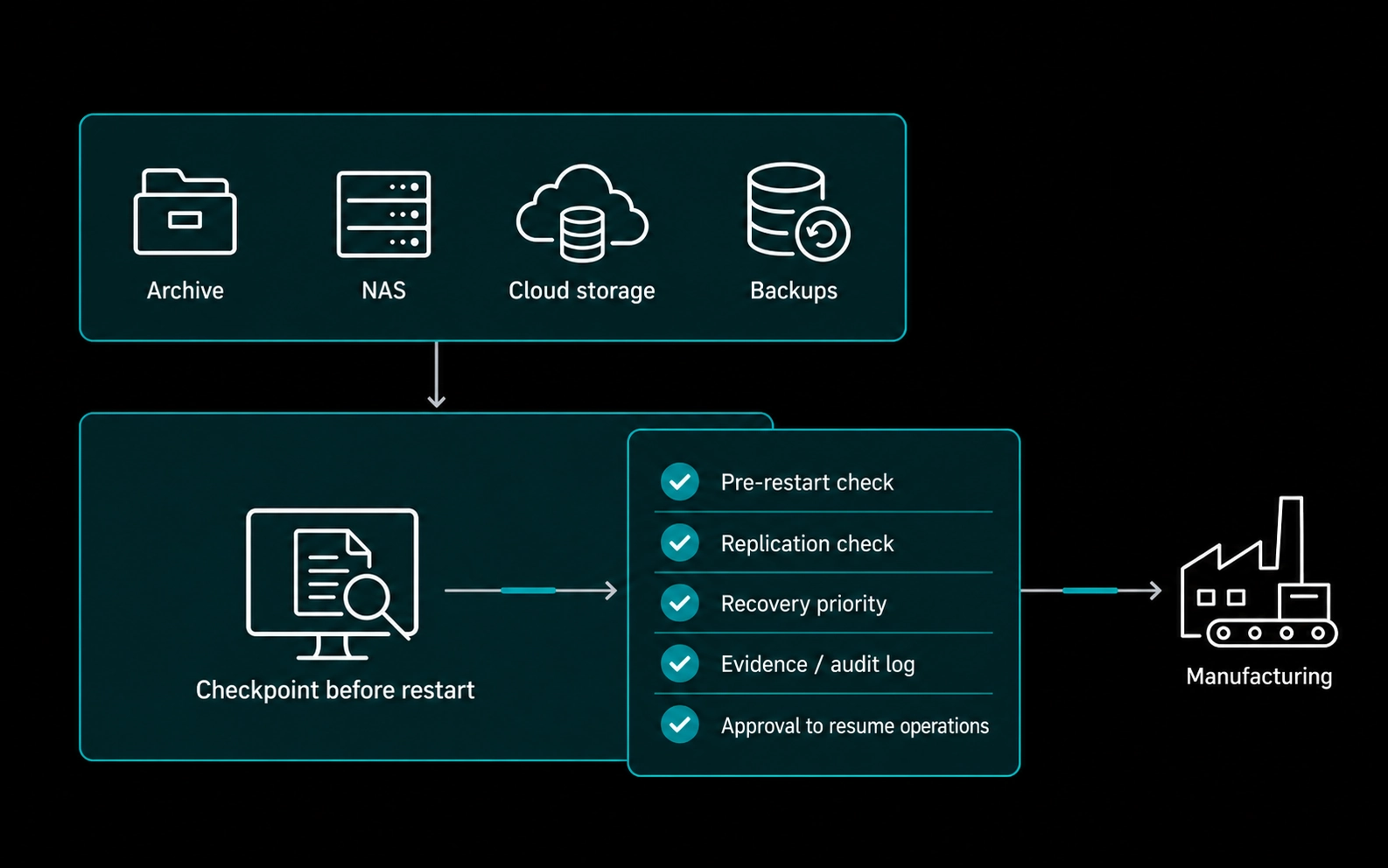
  • Storage & recovery

02 · CONTROL POINT

Inspect. Assess. Decide.

  1. 01
    Analyse the fileFile type, origin and malware indicators
  2. 02
    Apply appropriate methodsMultiscanning, CDR, sandbox or DLP — according to file type and protection requirements
  3. 03
    Apply the policyResult, exceptions and approval role

Inspection and decisions are documented in a traceable way.

03 · DECISION

The next step is clear.

APPROVED

Continue into the intended process

Engineering · PLM / DMS · ERP / MES · production

CLARIFICATION REQUIRED

Hold and review

Quarantine, further inspection or a decision by the responsible role.

Only approved files reach the destination system. Content that cannot be inspected conclusively remains in a controlled clarification process.

04 · INSPECTION & APPROVAL PROCESS

Turn file inspections into traceable approval decisions.

An agreed process connects file intake, inspection and accountable decisions. The specific steps depend on the workflow, destination system and applicable rules.

  1. 01

    Record intake

    Identify the source, transfer route and destination system.

  2. 02

    Inspect the file

    Apply analysis methods supported for the file type.

  3. 03

    Apply the policy

    Consider the result, protection requirements and responsibilities.

  4. 04

    Make a controlled decision

    Depending on configuration, approve, sanitise or isolate.

  5. 05

    Document the result

    Record the decision and relevant inspection information in a traceable way.

Which actions are actually possible for a given file depends on the product module, file format, configuration and destination system. CDR/sanitisation is not generally available for CAD, firmware, macro or proprietary production formats. “Approve, sanitise or isolate” describes possible decisions, not a universally available automated function.

05 · EXTENDED USE CASES

Inspect files in backups, archives and cloud storage under control.

In addition to external file intake, archives, NAS, cloud storage and backups may also be relevant — for example, during migrations or recovery. The appropriate inspection point depends on the storage platform, access and operational workflow.

06 · TECHNOLOGY COMPONENTS

Assess the roles of multiscanning, CDR, sandbox and DLP.

Selection starts at the file handover point. Malware scanning, Content Disarm and Reconstruction, sandbox analysis and Data Loss Prevention are assessed according to file types, latency, protection requirements and destination systems.

Illustration: parallel malware inspection of a technical file before it reaches a manufacturing cell

MULTISCANNING

Combine multiple malware engines at a file handover point.

For each control point, we assess which engines, file types, latency requirements and exception routes are relevant in MedTech or manufacturing operations.

07 · DEPLOYMENT

Deploy file security to suit manufacturing and MedTech.

On-premises, hosted/private cloud and SaaS options are assessed against file routes, data storage, availability, proximity to systems, maintenance and operational responsibilities.

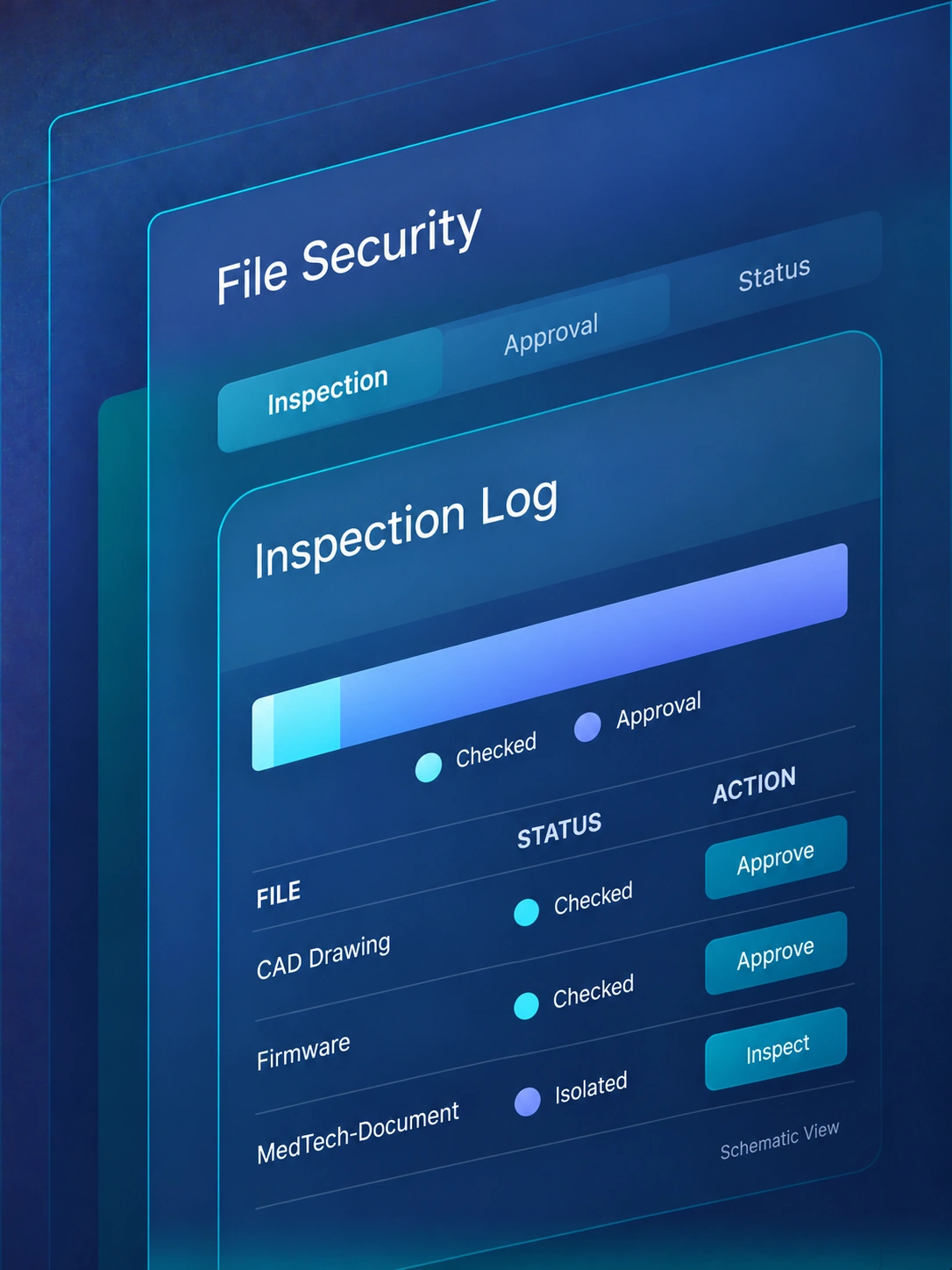
Schematic dashboard view for on-premises file security in manufacturing and MedTech
01

On-Premises

For local, tightly controlled or isolated environments. Scaling, updates, high availability and operation remain matters to be defined.

  • Proximity to systems and local data processing
  • In-house operational and update responsibilities
  • Integration with existing network zones
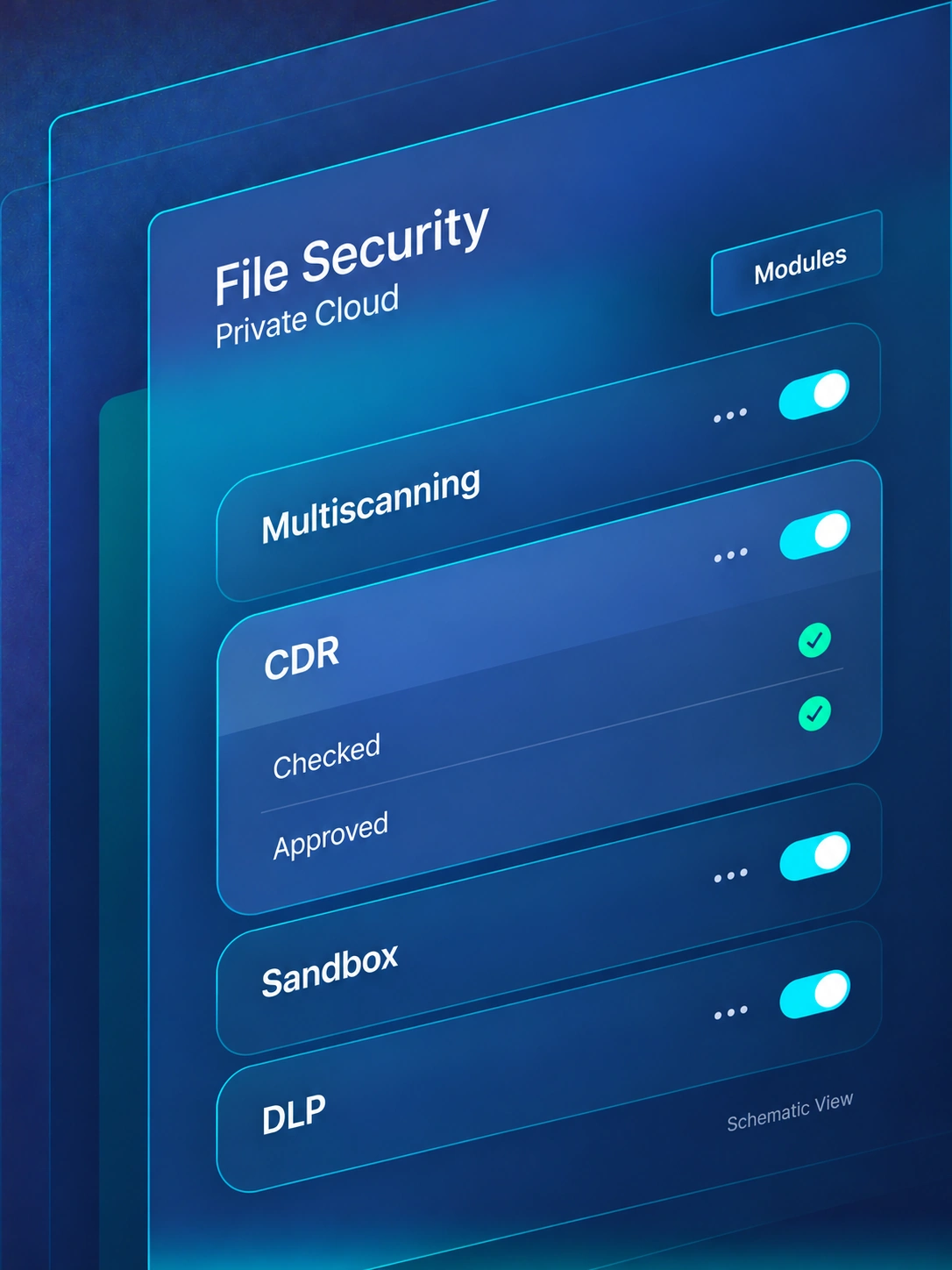
Schematic module overview of a private cloud for industrial file inspection
02

Hosted / private cloud

For containerised or cloud-adjacent workflows with a controlled tenant, network and operating architecture.

  • Cloud and container integration
  • Separation of data and responsibilities
  • Scaling and availability plan
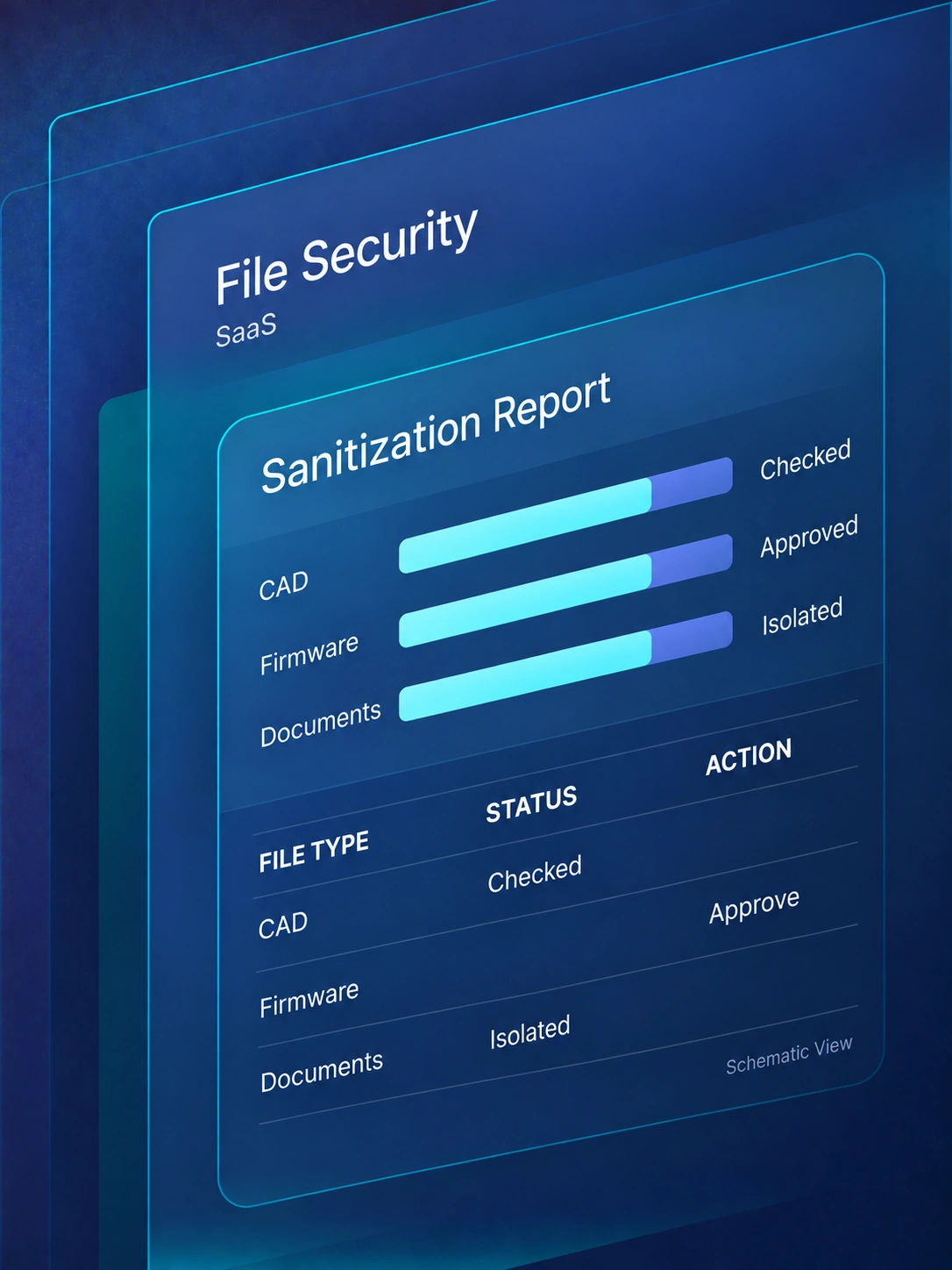
Schematic SaaS dashboard view for inspecting and sanitising technical files
03

SaaS

For clearly defined workflows where data classification, transfer, provider operations and integration are appropriately governed.

  • Less in-house platform operation
  • Review data routes and data processing arrangements
  • Plan interfaces and failure scenarios

08 · ROLES & TECHNOLOGY

Connect security processes and technology appropriately.

PEC Healthcare considers the organisational and technical handovers: which files arrive, where they are processed and under what rules they may be passed on. Suitable security technologies can analyse supported files and, depending on the solution and format, process them under control. This provides a basis for a concept tailored to the relevant system landscape.

MULTISCANNING

Use multiple malware detection engines.

Multiscanning analyses files with multiple engines. This provides additional detection perspectives but does not guarantee that every unknown threat will be found.

CDR

Process supported file formats under control.

CDR can remove or neutralise potentially risky content in supported formats. Lossless sanitisation of every technical file is not promised.

OPERATOR · INSPECTION AND APPROVAL RULES

Set decisions to fit the process.

Depending on the result and policy, options may include passing the file on, further inspection, quarantine or blocking. Such rules do not prevent every attack; responsibilities and operations still need to be defined.

Endrit Haliti, Managing Director of PEC Healthcare GmbH

Responsibility and implementation

File security for quality-critical manufacturing environments

PEC combines process and organisational work with a structured approach to file security. In quality-critical manufacturing environments, file sources and information routes, protection rules, responsibilities and the systems involved are considered together — from creation and editing through inspection, approval and exchange to storage. The approach is therefore adapted to specific workflows and system environments rather than transferring a standard model without review.

“We always consider organisation, processes, technology and people together.”

Endrit Haliti
Managing Director, PEC Healthcare GmbH

09 · THE NEXT STEP

Identify critical file intake points and find an appropriate control point.

Would you like to better secure supplier data, external uploads or file handovers to production-adjacent systems? In an initial technical discussion, we clarify your starting point, possible control points and a sensible next step.

  • Assess relevant file sources and destination systems
  • Discuss possible inspection and approval approaches
  • Agree a specific approach for a more detailed analysis
Discuss file security

10 · FAQ

Frequently asked questions about industrial file security

Where should external files be inspected?

Wherever possible, at a controllable handover point before files reach critical destination systems. The right inspection point depends, among other things, on the source, file format, transfer route and system architecture.

Is a traditional virus scanner enough?

A virus scanner is an important security component, but it does not automatically cover every requirement of complex file flows. Depending on the risk profile, additional analysis methods, sanitisation of supported formats, policies and documented approvals may be appropriate.

Can supplier and engineering files be inspected?

External file handovers can in principle be controlled. Which files can be analysed or processed, and how, must be assessed against the specific formats and technologies used. Proprietary design or production files have specific requirements.

Can backups and cloud storage be included?

Yes. Specialist storage security solutions are available for this purpose. Whether and how existing systems can be integrated depends on the storage platform, access model and technical architecture.

Does the entire IT/OT infrastructure need to be rebuilt?

Not necessarily. Analysis often starts with individual handovers or processes. Whether upstream inspection is possible and what changes are required must be assessed for each infrastructure.

How does a project with PEC Healthcare start?

In an initial discussion, we clarify relevant file sources, destination systems and existing security measures. We then agree the scope of a more detailed analysis and possible next steps.

11 · CONCLUSION

Which external files reach your critical systems?

Discuss with PEC Healthcare where file inspections could be usefully embedded in your development, production or approval processes.

Discuss file security